What Is Bedroom Zoning and Why Does It Matter for Bunk Beds?
If you have ever tried to fit two beds, a desk, and some storage into a single small bedroom, you already know the struggle. You need a system that separates sleeping from playing and studying without making the room feel cluttered. Bedroom zoning ideas solve that problem by dividing a room into functional areas. A bunk bed is the perfect starting point because it naturally creates vertical space for sleep and leaves the floor open for other activities. Instead of letting the bed dominate everything, you can use shelves, lighting, and color to carve out a quiet sleeping zone and a lively activity zone. This approach works especially well in shared rooms, where each person needs their own corner of calm.
How a White Bunk Bed with a Slatted Wood Base Sets the Stage
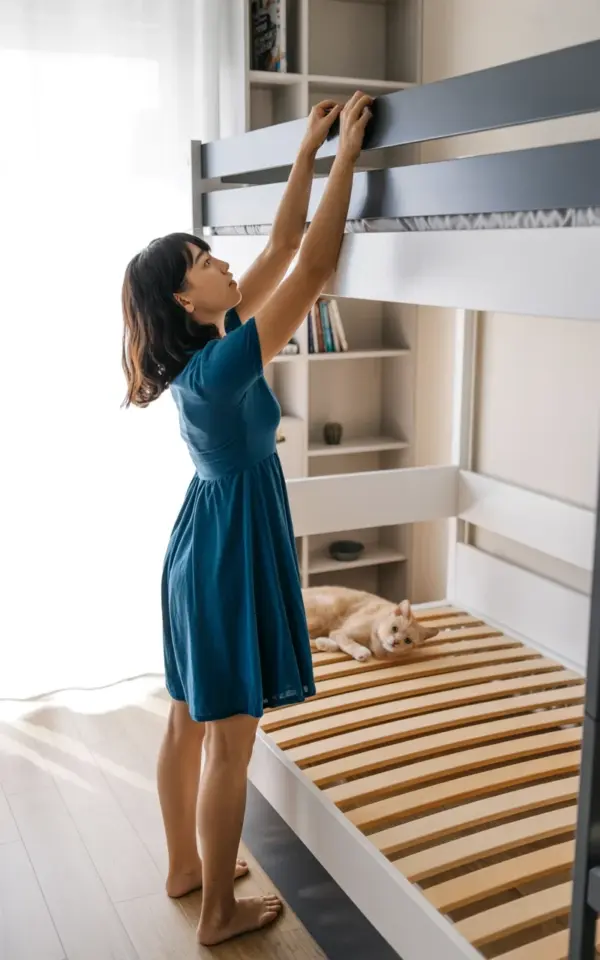
In the photo I want you to picture, the bed is white with a gray headboard and a slatted wooden base. That light, neutral color scheme opens up the room visually. A dark bed in a small space can feel heavy and overwhelming, but white reflects natural light and keeps the airy feel. The slatted wooden base is not just for looks; it allows air to circulate under the mattress, which helps with freshness and durability. If you are setting up a bunk bed for the first time, choose a finish that blends with your walls. A neutral base makes it easier to add colorful accents later, like the teal dress of the young woman in the image. That pop of color becomes intentional rather than chaotic.
The built-in shelving unit alongside the bed is the true star here. It is mounted directly on the white wall, holding books and small decorative items. This shelving acts as a visual and physical divider between the sleeping zone (the bed) and the activity zone (the floor area where the woman stands). For beginners, think of it as a room divider that does not block light. You can see right through the shelves, but the organized rows of books tell your brain “this is the storage side, that is the sleep side.”
Using a Built-In Shelving Unit to Separate Sleeping and Activity Areas
A simple shelf unit can do more than hold a few paperbacks. In the image, the shelves are placed right beside the bunk bed, almost like a bedside table that grows upward. This placement creates a clear boundary: when you are in bed, you are in the sleep zone. When you step off the bed and reach for a book, you are in the activity zone. That transition is subtle but powerful. If you want to recreate this, look for a wall-mounted shelving unit that is tall and narrow. It should be sturdy enough to hold books, small plants, or a lamp, but not so deep that it sticks out into the walkway.
Here are three simple rules for zoning with shelves:
- Position the shelf unit at the head or foot of the bunk bed to mark the edge of the sleep area.
- Keep the lower shelves for items you grab often, like books or a water bottle. Higher shelves can hold decorations that don’t need daily access.
- Use the shelves to add a small night light or a reading lamp. That soft light signals that the bed zone is for winding down.
In the photo, natural light pours in from the left side. That glow makes the white shelves and bed feel even more spacious. When you plan your own layout, try to place the shelving unit where it can catch daylight without casting a shadow on the bed.
Cozy Details That Make a Bunk Bed Feel Like a Retreat
No one wants to sleep in a space that looks like a dormitory. The cozy feeling in the image comes from layered, soft touches. A light-colored cat rests nearby on the floor or maybe on a rug (the photo does not show the full floor, but the cat is present and relaxed). That small living detail instantly warms the room. You can copy this by adding a soft rug under the bottom bunk or a few throw pillows in muted tones. The gray headboard on the white bed adds a subtle contrast that keeps the eye moving without overwhelming it.
For the built-in shelves, keep some shelves partly empty. The woman in the teal dress reaches for a book, so you know the shelves are functional, not just decorative. A mix of books and a few small objects (like a ceramic vase or a framed photo) makes the zone feel lived in. If you are new to styling, start with only three or four items per shelf. It is easier to add than to remove. And always use natural textures like wood, cotton, or linen to keep the coziness grounded in reality.
Real Life Details: The Girl, the Cat, and the Teal Dress
Let me explain why the specific elements in the photo matter for your own setup. The young woman wears a teal dress. That color is not an accident; teal stands out against the white and gray palette, so it draws your eye to the activity zone. In your own bedroom, you can use a bright accent color (on a
#bedroomzoningideas #bunkbedroom #smallspaceliving #shelvingunit #bedroomorganization
Leave a Comment