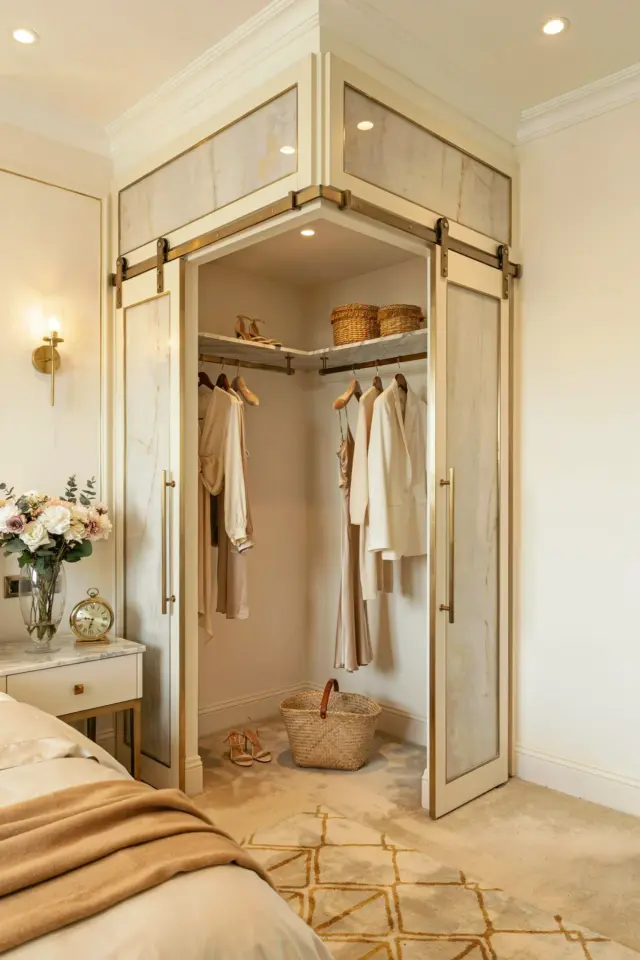
If you have an awkward corner in your bedroom that feels like wasted space, you already know the struggle. But a corner closet doesn’t have to be a luxury renovation reserved for expensive home magazines. Last month I turned my own neglected nook into a functional closet with just $30 of shelving and a tension rod. No power tools, no contractor, no waiting weeks for custom cabinetry. It freed up floor space, kept my clothes off the chair, and cost less than a dinner out. Here is exactly how you can do the same in your own small bedroom, with a few seasonal touches that keep things fresh year round.
Why corner closets work so well for small bedrooms
Most small bedrooms suffer from the same problem: you need storage, but you don’t have a dedicated walk-in or even a standard reach-in closet. That is where a smallbedroom corner comes in. Corners are often underused because they feel tricky to fit with typical furniture. But if you treat that corner like a mini closet zone, you instantly reclaim vertical real estate without blocking windows or doors.
I have seen corners that were barely three feet wide turned into a perfectly usable hanging section with shelves above. The key is to stop thinking of a closet as a box with a door. Instead, see it as a system that works with the room’s existing layout. A corner closet does not need to be enclosed. An open setup feels airy and makes the room look larger, which is exactly what a small bedroom needs.
Plus, corners naturally get less foot traffic, so you can install shelving or a rod without worrying about bumping into it every time you walk past.
How to plan a budget corner closet that actually fits your space
Before you buy anything, measure your corner. I mean really measure it, including the depth from the corner to where you want the front edge of your shelves. Most standard shelves are 12 or 16 inches deep. A corner that is 24 inches deep on each wall can hold a 12 inch shelf with room to spare. But a shallow corner might need a smaller wire shelf or a custom cut board from the hardware store.
For a true budgetdecor approach, the goal is to use what you already have or buy the cheapest solution that still looks intentional. My own setup used two cheap wire shelving units from the big box store, each about $15, plus a tension rod that cost $5. The total was under $30. I did not even buy brackets because the shelves came with their own frames that rest on the floor.
If you want a slightly more polished look, you can spring for a few floating shelves. But honestly, wire shelves are forgiving, they let air circulate around your clothes, and they are easy to cut if your corner is an odd width.
The $30 shelving hack that turned my corner into a closet
This is the part that makes most people nervous: the actual building. But trust me, this is a real diycloset project that takes less than an hour. Here is what I did step by step.
- I bought two wire shelf units (each about 30 inches tall with three shelves) and one tension rod that extends from 28 to 48 inches.
- I placed one shelf unit against the left wall and one against the right wall, basically forming an L shape in the corner. They did not need to connect.
- I used zip ties to secure the shelves to each other at the inside corner so they would not wobble. This took two minutes.
- I installed the tension rod between the two shelves, about chest height, so it runs diagonally across the corner opening.
- I added a few S hooks to the wire shelves for belts and bags, and that was it.
The result: a compact hanging section for shirts and jackets, plus three shelves on each side for folded clothes, shoes, and baskets. No drilling, no brackets, no level. The whole thing cost $28.50 after tax. If you want a rod that spans the entire width of the corner, you can buy a longer rod, but the diagonal trick gives you a surprising amount of hanging space without blocking the shelves.
Using tension rods for more hanging space without damaging walls
Diycloset projects rely heavily on tension rods because they require zero tools and zero commitment. But you have to pick the right rod for your weight. A standard shower tension rod can hold about 20 pounds of clothes if installed correctly. That means about 15 to 20 lightweight shirts or five heavy sweaters. For heavier items like coats or jeans, you need a heavy duty tension rod with spring reinforcement.
I used a cheap $5 rod for my lightweight tops and a sturdier $12 rod for my jackets. Both are placed in the same corner, one above the other, but staggered so they do not interfere. If your ceiling is low, you can also use a tension rod horizontally between two walls to create a shelf for baskets. That works best in corners where the two walls are parallel. In my case, the diagonal install was the only option, and it works beautifully.
One tip: wrap a little rubber shelf liner around the ends of the rod before you tighten it. That stops it from slipping and protects your paint.
Organizing your corner closet for daily ease
Once the structure is up, the real magic happens with bedroomorganization. A corner closet can quickly become a messy pile if you do not have a system. I recommend using small baskets or bins for accessories, socks, and underwear. You can find cheap fabric bins at dollar stores or use shoeboxes covered in paper. The goal is to create distinct zones.
I divided my corner into three zones: the left shelves for seasonal clothing (currently spring T-shirts and light cardigans), the right shelves for shoes and bags, and the hanging rod for items I wear weekly. Everything has a place, so putting laundry away takes less than five minutes. I also keep a small hook on the side of the shelf unit for my robe, which saves space and keeps it handy.
For a seasonal refresh, I swap the bins. In winter, I move heavy sweaters to the bottom shelf and put sandals in a bin under the bed. This rotation keeps the corner closet from feeling cluttered even as your wardrobe changes.
Seasonal updates that keep your corner closet feeling fresh
This is where the trend aware approach comes in. A corner closet is not a one time project. You can update it with the seasons without spending extra money. In spring, I add a small scented sachet (made from dried lavender from last year’s garden) to keep moths away and make the closet smell good. In summer, I swap the heavy wire shelves for lighter colored baskets or just remove them entirely to let air flow.
Fall is the perfect time to add a soft throw blanket draped over a shelf, which doubles as decor and an extra layer for chilly nights. Winter means using the lower shelves for boots and bulky sweaters, and adding a small hook for a scarf collection. These tiny adjustments cost nothing but make the corner feel intentional and personal.
Right now, since it is early spring, I recommend taking everything off your shelves and vacuuming the corner. Then fold your lighter clothes and place them front and center. Your winter coats can go into storage under the bed. This quick refresh takes 15 minutes and makes your whole bedroom feel cleaner.
Avoiding common mistakes when building a budget corner closet
I learned a few things the hard way. First, do not overload your tension rod. If you hang 30 heavy sweaters on a $5 rod, it will bend and fall in the middle of the night. Trust me, that wake up call is not fun. Stick to lightweight items or upgrade to a heavy duty rod.
Second, measure twice. I bought shelves that were too deep for my corner the first time. They stuck out past the wall, blocking the path to my bed. I returned them and got slimmer ones. The depth of your corner matters more than the height.
Third, do not skip the zip ties or some kind of anchor. Wire shelves can tip if you are not careful, especially if you lean on them. A few zip ties connecting the two units to each other, or to the wall with command strips, make the whole thing stable.
Finally, avoid over decorating. A corner closet looks best when it is functional and uncluttered. Resist the urge to put decorative knick knacks on every shelf. That just collects dust and makes the space feel smaller.
A corner closet does not need to be expensive or complicated. With a little planning and less than $30, you can turn that awkward nook into a storage solution that actually works for your life. The best part is that it adapts with you. Swap out shelves, change the rod height, or add a new bin whenever the season changes. Your small bedroom can feel bigger, your clothes stay organized, and your wallet never feels a pinch.
If you try this yourself, I would love to hear how it goes. Send me a message or tag me in your photos. And if you have a corner that is still empty, now is the perfect time to fill it with something useful. Get those shelves and a tension rod, and give your bedroom the upgrade it deserves without the renovation headache.
#cornercloset #bedroomorganization #budgetdecor #smallbedroom #diycloset
Leave a Comment