Why I Finally Gave My Bedroom a Minimalist Makeover
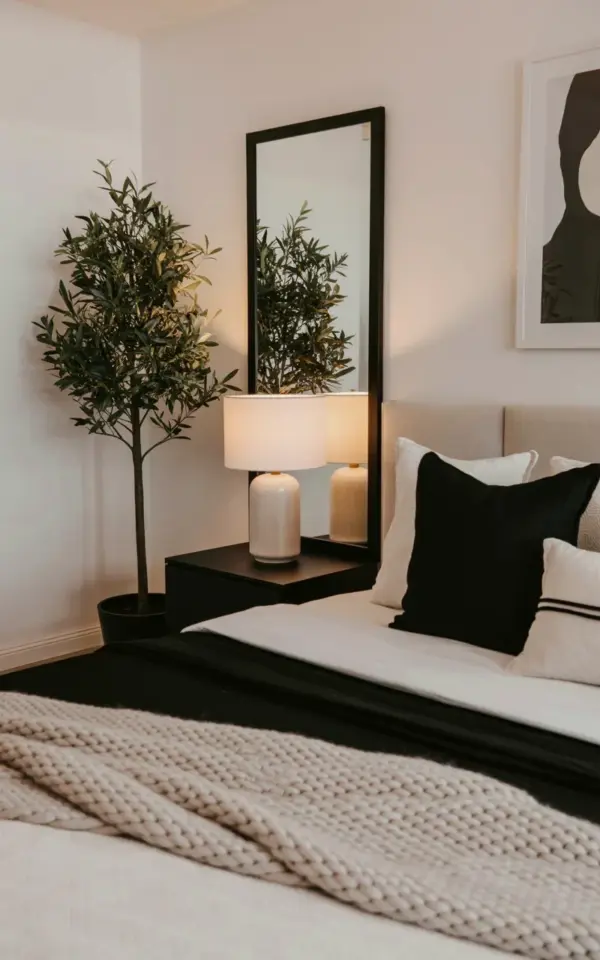
Look, I’m not someone who naturally gravitates toward empty spaces. I like books stacked on the floor and a few mismatched trinkets on the dresser. But my bedroom had slowly turned into a storage unit for things I didn’t need. So when I decided to try a minimalist bedroom makeover, I picked one rule: keep only the stuff that actually helps me sleep better. That meant saying goodbye to the old clunky nightstand with the stuck drawer (honestly, every time I opened it I’d yank three times and curse). And hello to a single black-framed mirror, a white lamp, and a tall olive tree that sits in the corner like a quiet guardian. Not gonna lie, the change surprised me. It only took a weekend, and the room went from stressful to serene.
Here’s the thing: I didn’t want a cold, museum-like bedroom. I wanted calm without feeling sterile. So I kept the walls a warm white, not a stark hospital white, but one with a tiny bit of beige in it. That made a huge difference. And the black accents? They add structure. The olive tree brings life. Together they make the room feel finished but not crowded. Who knew a tree could do that?
The Before: Clutter, Mismatched Furniture, and a Weird Lamp
Let me describe the disaster before the makeover. I had a dark brown bed frame that scratched easily, a dresser with two different handles (one missing), and a lamp that was slightly tilted because I dropped it moving in. That lamp bugged me every single night. The dresser top was covered in receipts, loose change, and a candle that had burned down to a nub. And there was this giant pile of pillows on the bed, decorative ones that I never used but felt guilty throwing away. Honestly, the room had no visual flow. It was just stuff I’d collected because I didn’t know what else to do with it.
One evening I sat on the edge of the bed and realized I couldn’t take a deep breath. The space felt tight. So I started taking photos from every angle, then deleted everything that wasn’t essential. I gave away the tilted lamp (bye, weirdo), donated half the pillows, and sold the dresser on Facebook Marketplace for $20. That felt good. Really good.
- The old nightstand: wood veneer with a sticky drawer that only opened halfway.
- The new nightstand: simple black, no handles, just a clean square silhouette.
- The mirror: nothing before. Now a large black rectangle that reflects the olive tree and opens up the room.
And that was it. I didn’t buy a lot of new things. I bought strategically.
How an Artificial Olive Tree Became the Room’s Anchor
Ok so the olive tree. I was skeptical at first. A fake plant in a bedroom? But here’s the specific reason I went with it: real olive trees indoors need a lot of light, and my corner is slightly dark. Plus I have a habit of forgetting to water things. The artificial version from a home goods store cost about $65, came in a slim black planter, and it stands about four feet tall. The leaves have a matte finish, no plastic shine, and the trunk has realistic knots. No joke, visitors usually think it’s real until they touch it.
I placed it in the corner near the window, where it catches the late afternoon light and casts a soft shadow on the warm white wall. That shadow, by the way? It changes during the day. Sometimes it’s long and dramatic, other times it’s a short blotch. I find myself watching it while I’m falling asleep. Weird? Maybe. But it gives the room a living, breathing quality without any actual responsibility. It’s like having a pet that you can ignore completely. For a modern minimalist space, that kind of low-effort nature is perfect.
Black Accents That Pull Everything Together
The black and white palette in this makeover came together by accident. I originally wanted all white, but the mirror was on sale. A large black-framed mirror, 30 by 40 inches, rectangular. I hung it centered above the black nightstand. Then the lamp on the nightstand is white ceramic, a simple cylinder shape, no shade. It creates a contrast that is both sharp and soft. The bedding is white with a single charcoal throw and two black-and-white patterned shams. The abstract artwork on the far wall is black ink on white paper, framed in thin black wood.
The trick with black accents in a small bedroom is not to overdo it. Black eats light, so if you cover too much surface the room feels like a cave. I used black on only three pieces: the mirror frame, the nightstand, and the planter. Everything else stays white or cream. This gives the eye a path to follow, from the dark base up to the light walls. Plus, the black mirror pulls double duty, it reflects the window across the room, making the space feel at least 20 percent bigger. That’s not a scientific measurement, it’s just how it feels.
Layered Bedding and Warm Lighting for a Cozy Minimalist Vibe
Here’s the paragraph that might ramble a little. Because I care a lot about bedding. I had a fleece set before, the kind that pills after three washes. Now I have a linen duvet cover in off-white. It wrinkles easily, but I actually like the rumpled look. It feels casual and lived-in. Under that, a thin cotton blanket in charcoal gray. And then two pillows: one firm for sleeping, one softer for reading. That’s it. No giant ruffled shams, no decorative bolsters. The layers are functional: you can strip them back in summer or add a throw in winter. And the texture difference, smooth linen against matte cotton against the rough black planter, keeps the room from looking flat.
The lighting is the secret sauce. I swapped the overhead fixture for a dimmable warm LED (2700K, none of that blue office light). The white ceramic lamp on the nightstand has a soft glow. At night I turn off the overhead and just use the lamp. The shadows from the olive tree and the mirror create a gentle cocoon effect. Honestly, it makes me look forward to bedtime. Even my cat seems to approve, she naps on the folded throw now instead of hiding under the bed.
What This Minimalist Bedroom Makeover Actually Cost
I spent around $300 total. Not a huge splurge. The mirror was $40 from an online surplus store. The nightstand was $60 secondhand (it had a small scratch on the side, which I covered with a piece of black electrical tape, you can’t see it unless you kneel and squint). The olive tree and planter were $65. The linen duvet cover was on sale for $70. The lamp was $30, and the artwork was a DIY project, a piece of paper, some black paint, a cheap frame. The total took about four hours of shopping online and one hour of hanging and arranging.
But the biggest cost, to be honest, was mental. I had to let go of the idea that “more is better.” I had to stop feeling wasteful for donating things that were still functional. Once I pushed past that guilt, the makeover became incredibly easy. If you want to do something similar, start with one wall. Clear everything off the surface, put back only two or three items, and see how you feel. You might hate it. Or you might love it so much you do the whole room.
The After: A Bedroom That Actually Helps Me Rest
Sitting here now, looking at the black mirror reflecting the olive tree and the warm wall, I feel an actual sense of relief. The room is simple. It doesn’t demand attention. There’s nothing to fix, no pile to tidy. The bedroom makeover didn’t require a total renovation or a professional designer. It just required editing. And the payoff is that I sleep better. Not because the bedding is fancy, but because my brain isn’t processing a dozen visual distractions before I close my eyes.
If you’ve been on the fence about a minimalist bedroom refresh, start with the five things I used: a warm wall color, one plant (real or fake, I won’t judge), one black accent piece, layered bedding, and a single piece of art. Keep the rest bare. It feels uncomfortable at first, like walking into an empty gallery. But after a week, you’ll wonder why you waited so long. Save this idea for your own room, and let me know what you try.
#minimalistbedroom #bedroommakeover #olivetreedecor #blackandwhite #modernminimalist
Leave a Comment